
The Brand-Name Premium Is Disappearing. Here's How to Fight Back.


For the first time ever, store brands now account for half of all grocery units sold across Europe's six largest markets — France, Germany, Italy, the Netherlands, Spain, and the UK. That milestone, reported today by Circana and covered in trade press this morning, isn't a blip driven by recession jitters. It's the culmination of five consecutive years of private label unit share growth. And it shows no signs of reversing.
In the US, the picture is nearly as stark. Store brand revenue hit a record $282.8 billion in 2025, growing at three times the rate of national brands. Unit share crossed 23.5% — an all-time high. In some categories, national brands actually lost unit volume while private labels gained.
Brand Name vs Private Label : Not Just About $$$
The conventional story about private label goes like this: inflation squeezes budgets, consumers trade down, brands wait it out and win them back when conditions improve. That story is just wrong in 2026. The dynamic has fundamentally shifted.
Retailers are no longer filling shelves with generic alternatives. They're building tiered brand architectures — value basics, mid-tier staples, and premium private label lines that compete directly on quality, design, and innovation.
Kroger's Private Selection features single-origin coffee and artisan snacks with elevated packaging. Walmart's Bettergoods line now includes chef-driven flavors, plant-based formats, and specialty ingredients — and Walmart just announced a redesign of its Great Value brand to look less like a compromise and more like a deliberate choice. ALDI's store brands have repeatedly outperformed national brands in blind taste tests conducted by Germany's most respected consumer testing body.
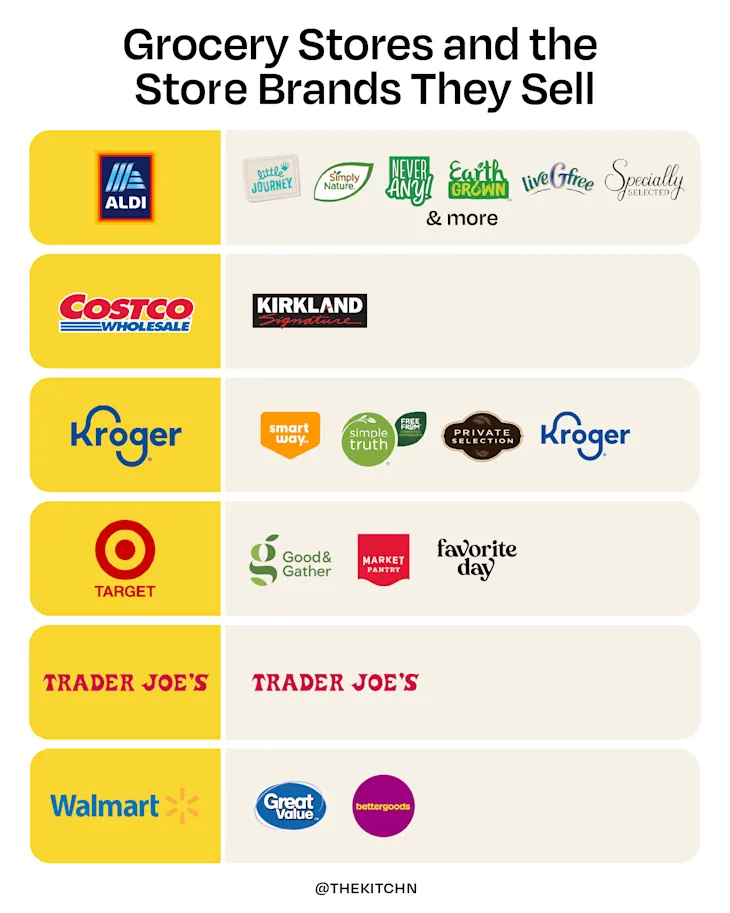
Gen Z is accelerating this shift. They grew up with Trader Joe's and Costco Kirkland as cultural markers, not budget fallbacks. NielsenIQ's research shows they purchase private label products more than any previous generation and often actively prefer them. One-third of consumers now say brand names have become less important than they were a year ago. For younger cohorts, that number is higher.
The Real Threat: Retailer Data Advantages
The most under-appreciated part of this story is structural. Retailers possess something national brands and most DTC operators simply do not have: real-time visibility into shopping behavior across millions of transactions. In 2026, major retailers are combining that transaction data with AI to identify white space in the market and move new private label products from concept to shelf in weeks — a timeline that would take national brands months or years to match.
This creates a compounding disadvantage. Retailers know what's missing, they have the manufacturing relationships, the shelf control, and the margin incentive to fill the gap with their own product. National brands and independent DTC operators don't see the full picture until it's already on shelf.
Three Places Where Brands Can Still Win
The categories where branded products are holding ground share a common profile: strong emotional resonance, community identity, or perceived expertise that a retailer label cannot replicate. Treat categories — premium chocolate, specialty coffee, functional snacks — are growing even as their mainstream equivalents bleed to private label. Consumers who are cutting costs on paper towels and pasta are still spending on the things they love. The DTC brands winning here are the ones that have built a point of view, not just a product.
Community and loyalty mechanics that a retailer shelf cannot replicate are the second moat. Personalized replenishment, early product access, co-creation with customers, and membership recognition all create stickiness that Kroger's private label cannot match. DTC brands that have built their own customer relationships — and own that data — are better positioned than brands that live primarily on retail shelves.
Innovation velocity is the third lever. Limited editions, seasonal drops, and format experimentation keep national and independent brands culturally present in ways a store brand structurally cannot match. The brands that treat their product calendar like a content calendar — shipping novelty and building anticipation — stay visible even when they can't compete on price.
What Operators Should Do Right Now
Competing on price or shelf placement alone against a retailer's own brand is a losing game — they have the margin advantage and the data advantage built in. The strategic question for every brand operator is: what does our brand offer that a retailer brand structurally cannot? If the honest answer is "not much," that's the gap to close before the private label tide catches up to your category.
Build first-party relationships. Invest in the product categories where emotional resonance and expertise matter. Launch things that can't be immediately copied. And use promotions surgically — Circana's data shows that brands over-promoting on shelf are subsidizing trade without building any lasting preference. Targeted promotions via loyalty data and retail media networks outperform blanket discounting every time.
The era of automatic brand loyalty is over. What's left is earned loyalty — and the brands that know exactly why a customer chose them have a fighting chance. The ones that don't are just expensive shelf filler.
KEY SOURCES:
BakeryAndSnacks.com — "Private label is surging. Here are 3 ways food brands can fight back" (April 22, 2026)
PLMA 2026 Annual Private Label Trade Show / plma.com
eMarketer — "Private labels had a moment in 2025. That trend is unlikely to cease anytime soon." / emarketer.com
Circana private label webinar coverage (foodnavigator-usa.com), CNBC Walmart Great Value redesign story, NielsenIQ private label market share data.
This piece was written by Julianna x her AI skills that she built 👩🏼💻


Comments